Introduction
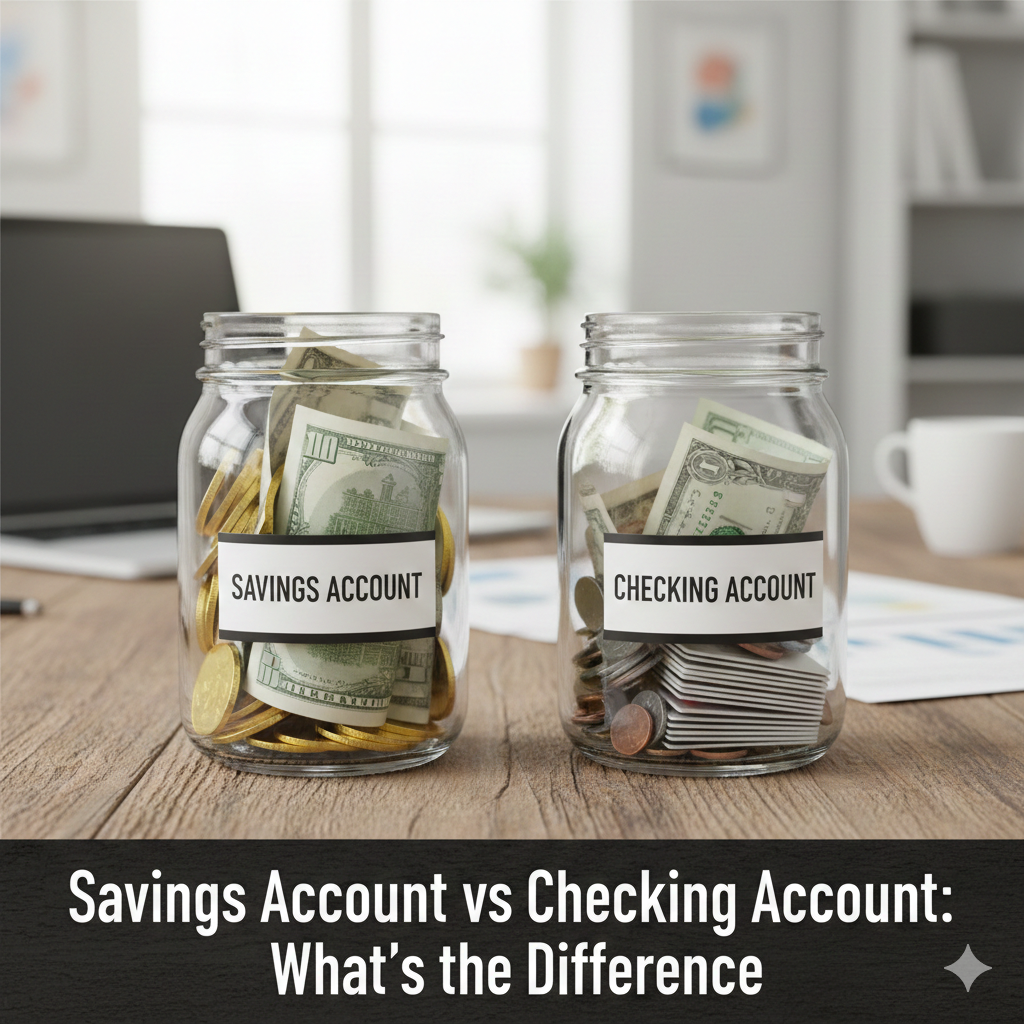
Savings vs checking account is a key decision for beginners managing money: one handles daily spending, while the other protects funds and encourages saving.
Many beginners open accounts without understanding how they work together, which can lead to overdrafts, missed savings, or idle money. This guide explains how each account functions, when to use one over the other, common mistakes to avoid, and how to set up a simple two-account system that supports better habits with minimal effort.
What a checking account is really for
A checking account is your transaction hub.
Best uses:
- Receiving income
- Paying bills
- Everyday purchases
- Transfers and withdrawals
Checking accounts prioritize access and speed, not growth.
[Expert Warning] What beginners often overlook is that checking accounts aren’t designed to hold savings long-term—low interest and easy access encourage spending.
What a savings account is meant to do
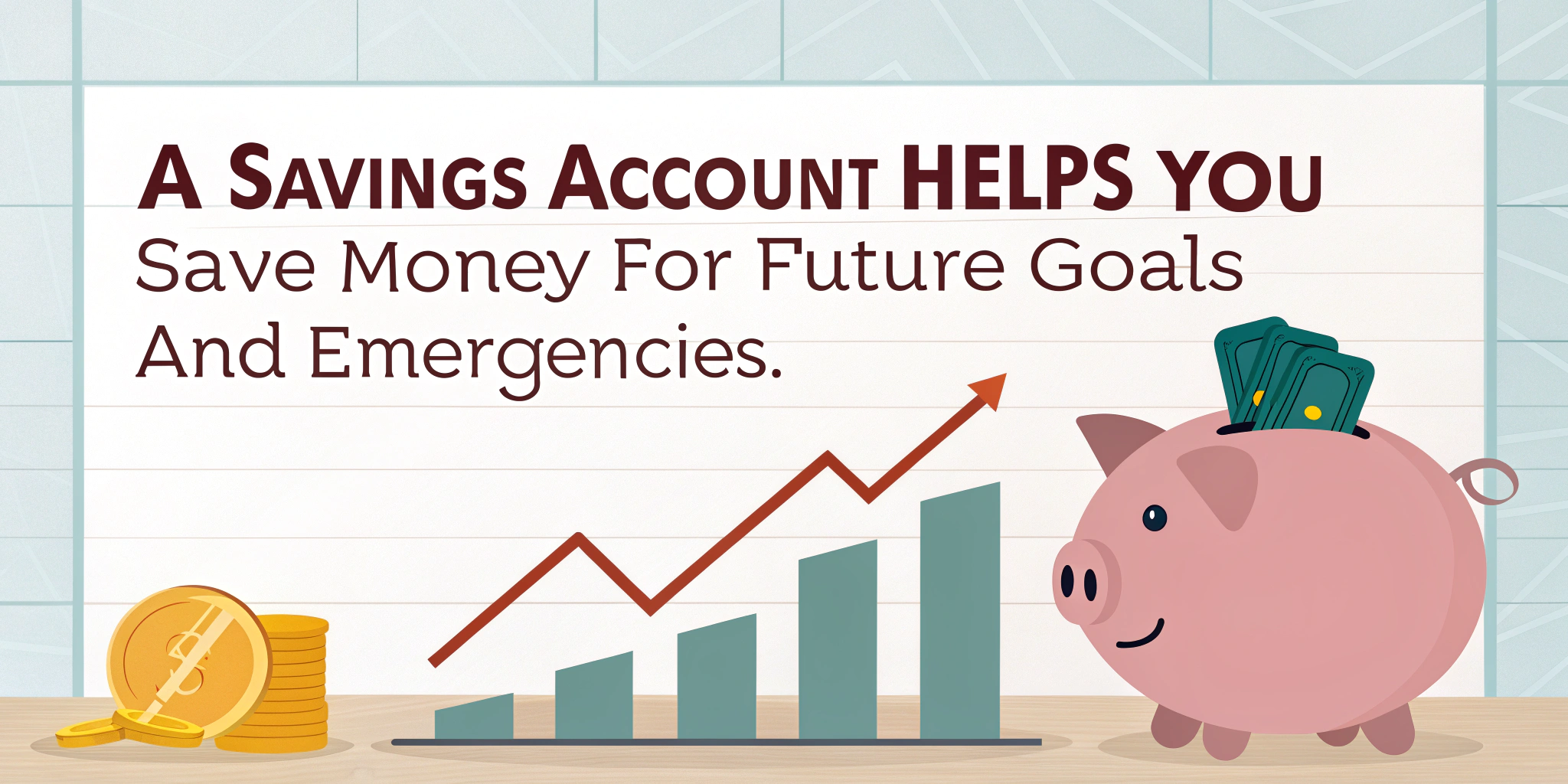
A savings account is your buffer and protection layer.
Best uses:
- Emergency funds
- Short-term goals
- Holding money away from daily spending
Savings accounts trade convenience for discipline—and that’s intentional.
[Pro-Tip] From real usage, keeping savings slightly inconvenient dramatically reduces impulse spending.
Key differences beginners should feel day-to-day
Accessibility
- Checking: Instant access via card and transfers
- Savings: Limited transactions; fewer touchpoints
Interest
- Checking: Minimal or none
- Savings: Earns interest (varies by provider)
Spending behavior
- Checking: Encourages use
- Savings: Encourages restraint
Common beginner mistakes (and how to fix them)
Mistake: Using checking as a savings account
Fix: Move non-spending money to savings immediately after income arrives.
Mistake: Constantly transferring back from savings
Fix: Separate goals—don’t mix emergency money with daily funds.
Mistake: Choosing accounts based on convenience only
Fix: Look at fees, interest, and access controls together.
Information Gain: Separation creates savings
Most SERP pages list features. What they miss is behavioral separation.
When money is:
- Visibly separated → spending drops
- Harder to access → savings rise
- Assigned a purpose → stress decreases
The act of separation—not the interest rate—drives results early on.
Real-world scenario: a simple two-account system
In practical situations, beginners succeed by:
- Depositing income into checking
- Automatically moving a portion to savings
- Paying all bills from checking only
This creates a clean mental boundary.
[Money-Saving Recommendation] Choose accounts with no maintenance fees and clear transfer rules—simplicity beats optimization early.
Table: Savings vs checking at a glance
| Feature | Checking Account | Savings Account |
| Primary purpose | Spending & bills | Saving & buffers |
| Access speed | Immediate | Limited |
| Interest | Low/None | Higher |
| Spending risk | High | Low |
| Best for beginners | Essential | Essential |
When to use only one (and when not to)
- Only checking: Early stage, very tight cash flow (temporary)
- Only savings: Rarely recommended for daily life
Most people benefit from using both together, even with small balances.
How to choose beginner-friendly accounts
Look for:
- No monthly fees
- Easy transfers between accounts
- Clear transaction limits
- Simple mobile access
Avoid accounts with penalties you don’t understand.
FAQs
Can I use a savings account like a checking account?
Not ideally—transaction limits and access make it inconvenient.
Should beginners have both accounts?
Yes, for spending control and saving discipline.
Do savings accounts really help you save?
Yes—separation reduces impulse spending.
Is it bad to keep money in checking?
For daily use, no; for long-term holding, yes.
How often should I move money to savings?
Right after income arrives works best.
Are online savings accounts safe?
Yes, when regulated and insured.
Conclusion
Savings accounts and checking accounts aren’t competitors—they’re partners. Checking handles life; savings protects progress. When used together with clear roles, they reduce stress, prevent mistakes, and make financial habits easier to maintain.
Internal link
Credit Card vs Debit Card for Beginners: Which Wins?
External link
Bank accounts and services | Consumer Financial Protection Bureau