
Introduction
How much should I save each month depends on your income stability, essential expenses, and current life phase—not a fixed percentage rule.
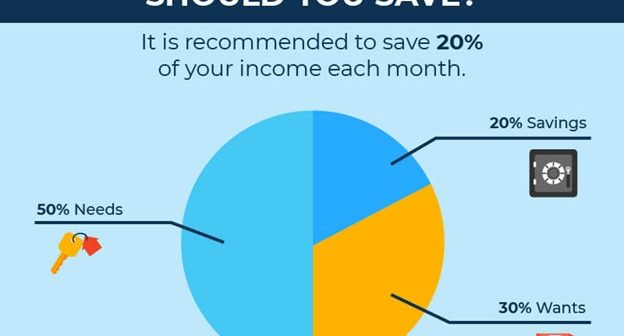
Generic advice like saving 20% of your income often creates guilt rather than progress. Rising living costs, irregular income, and competing priorities make rigid targets unrealistic. This guide explains how to determine a personal monthly savings amount you can consistently maintain, highlights common mistakes that stall progress, and introduces a phase-based approach that adapts as your financial situation evolves.
.
Why percentage rules confuse more than they help
The 10%, 20%, or 30% saving rules sound simple, but they ignore context.
They fail because they:
- Assume stable income
- Ignore fixed-cost pressure
- Don’t adjust for debt or emergencies
- Create “all-or-nothing” thinking
Saving should fit your life—not force your life to fit a rule.
[Expert Warning] What beginners often overlook is that saving too aggressively can cause rebound spending and abandonment.
A better question: “What can I save consistently?”
Instead of asking how much should I save, ask:
- What amount can I save every month, even in bad months?
- What keeps my finances stable without stress?
Consistency compounds faster than ambition.
Phase-based saving (information most guides miss)
This is where most SERP results fall short.
Phase 1: Stabilization phase
Goal: avoid financial emergencies.
- Save 3–5% if income is tight
- Focus on one-month expense buffer
- Prioritize consistency over growth
Phase 2: Security phase
Goal: reduce stress and absorb shocks.
- Save 8–12% if expenses are controlled
- Build emergency fund and sinking funds
Phase 3: Growth phase
Goal: long-term goals and investing.
- Save 15%+ if income is stable
- Split savings between goals and investing
[Pro-Tip] From real usage, people progress faster when they change phases gradually instead of forcing high percentages early.
Common mistakes when deciding how much to save
Mistake 1: Comparing yourself to others
Fix: Compare to your past month, not someone else’s income.
Mistake 2: Saving leftovers
Fix: Decide the amount before spending.
Mistake 3: Ignoring debt context
Fix: Save small amounts while paying high-interest debt strategically.
Mistake 4: Resetting goals every month
Fix: Keep savings steady for at least 60–90 days.
Information Gain: Saving amount should follow expense control
Top-ranking pages treat saving as independent of spending behavior. In reality, saving increases after spending stabilizes.
When expenses fluctuate wildly:
- High saving targets fail
- Motivation drops
- Progress resets
When spending is predictable:
- Saving scales naturally
- Stress decreases
- Confidence grows
Saving is a result of control, not the starting point.
Beginner mistake most people make (unique section)
The biggest beginner mistake is trying to save “as much as possible” instead of “as much as repeatable.” This often leads to skipped months, guilt, and eventually quitting. Small, boring consistency wins.
A simple method to calculate your monthly saving amount
- List essential expenses (financial floor)
- Subtract from average income
- Choose 10–30% of what remains, not total income
- Start at the low end
- Automate it
Increase only after two stable months.
Table: Monthly saving guidance by situation
| Situation | Suggested Monthly Saving |
| Tight income / high expenses | 3–5% |
| Moderate stability | 8–12% |
| Stable income, low debt | 15–20% |
| High income, strong buffers | 20%+ |
Where to put monthly savings
Savings should match purpose:
- Emergency buffer → separate savings account
- Irregular expenses → sinking funds
- Long-term goals → investment accounts
Once habits are stable, beginner-friendly savings and investment tools can reduce friction and protect progress.
[Money-Saving Recommendation] Keep savings slightly inconvenient to access—friction prevents impulse withdrawals.
FAQs
Is saving 10% of income enough?
It can be, depending on expenses and stability.
Can I save while paying off debt?
Yes. Small savings prevent setbacks while debt is reduced.
Should savings change every month?
No. Keep it stable for at least two months.
What if income is irregular?
Save based on your lowest realistic month.
Is it okay to save less during tough months?
Yes. Consistency matters more than amounts.
When should I increase my savings?
After expenses stabilize and stress decreases.
Conclusion
How much you should save each month isn’t about hitting a magic number—it’s about building a habit that survives real life. Start small, automate early, and increase only when stability improves. Saving works when it fits your reality.
Internal link
Why Saving Money Feels Impossible and How to Fix It 2026