Introduction
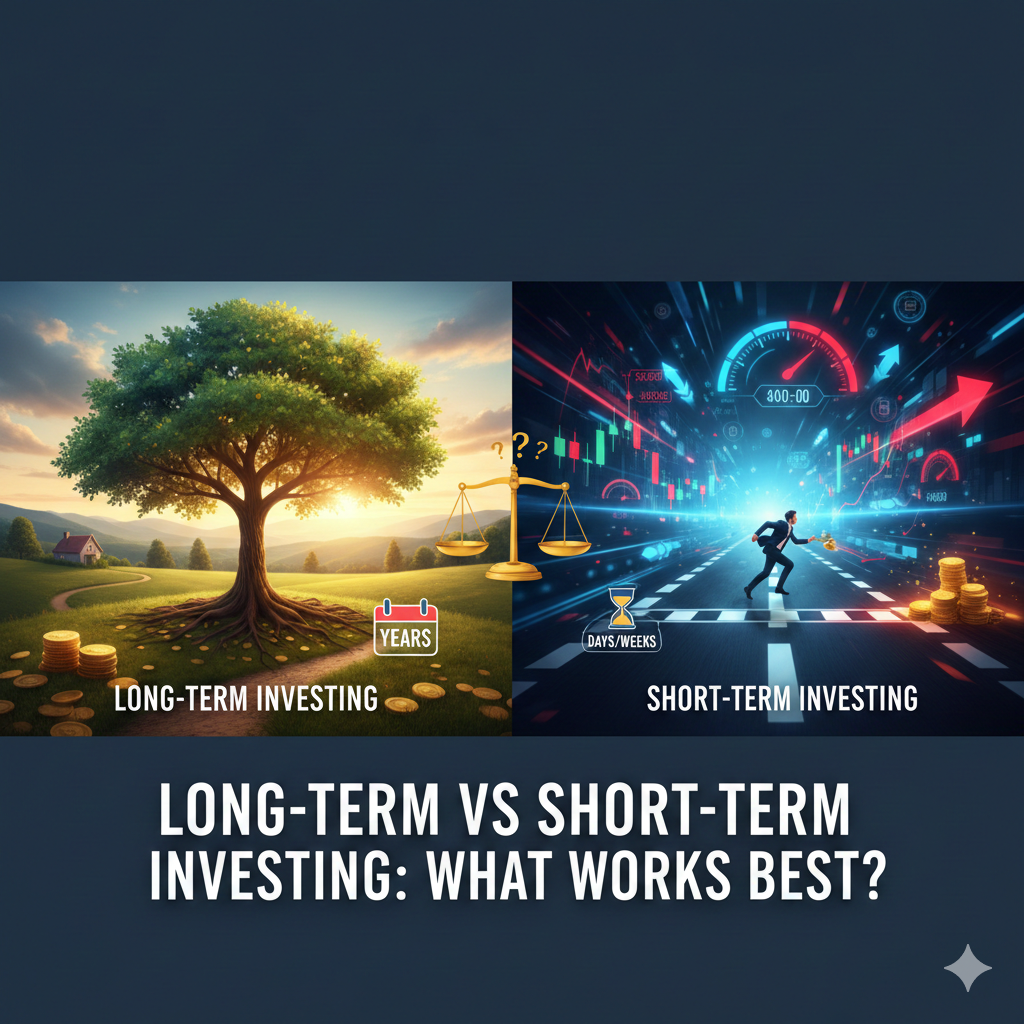
Long-term vs short-term investing comes down to your time horizon, risk tolerance, and how actively you want to manage decisions. Many beginners are drawn to short-term trading because it feels faster and exciting. Long-term investing may seem boring, but it’s where most real wealth is built. This guide explains how both approaches work, highlights mistakes beginners often make, and helps you choose a strategy that matches your goals, personality, and available time.
The quick answer
Long-term investing focuses on holding assets for years to benefit from compounding and market growth, while short-term investing aims to profit from shorter price movements and requires active monitoring, higher risk tolerance, and consistent decision-making.
What long-term investing really looks like
Long-term investing means holding investments for years or decades.
Typical characteristics:
- Broad diversification
- Lower trading frequency
- Emphasis on compounding
- Tolerance for short-term volatility
Long-term investors accept market ups and downs in exchange for growth over time.
[Expert Warning] What beginners often overlook is that long-term investing still feels uncomfortable during market drops—but those periods are normal, not failures.
What short-term investing actually involves
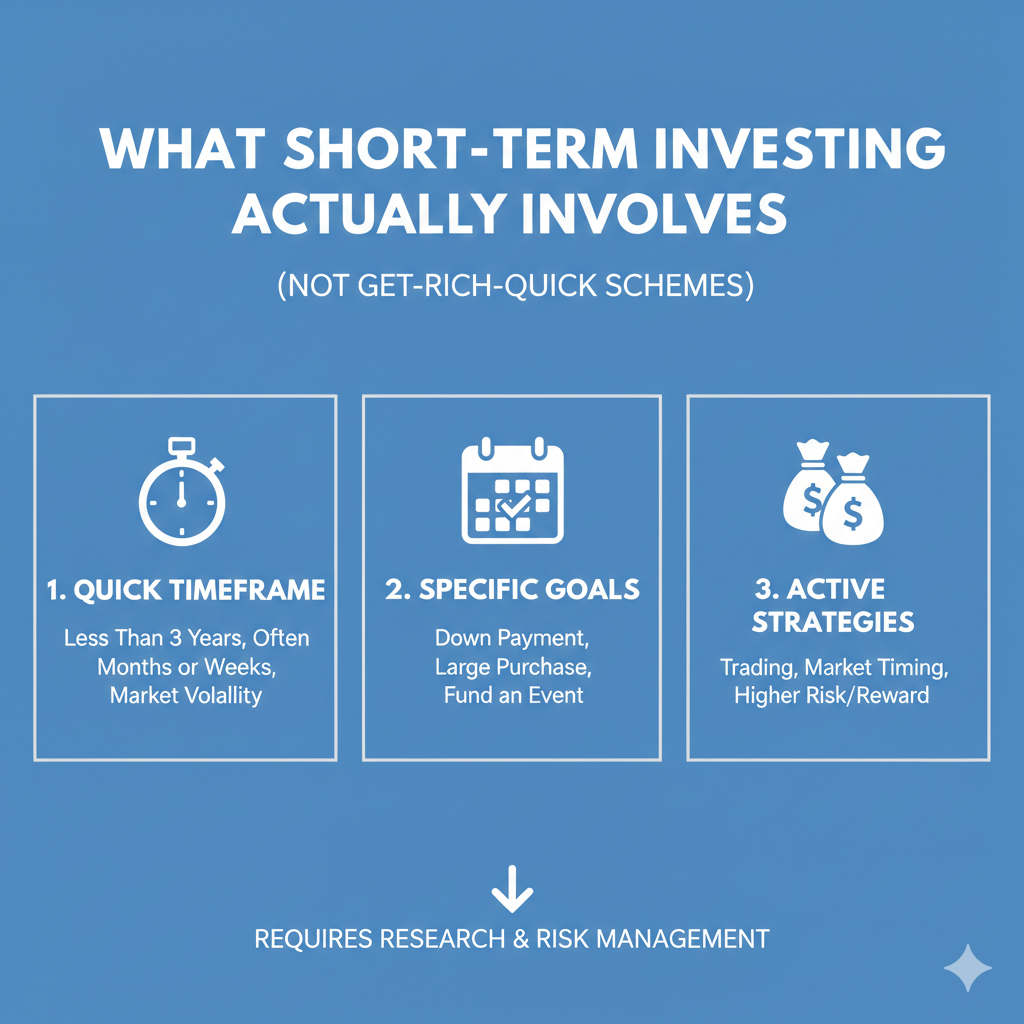
Short-term investing (or trading) focuses on shorter time frames, from days to months.
Common features:
- Frequent buying and selling
- Higher emotional pressure
- Need for timing and discipline
- Greater exposure to mistakes
It can work—but only with skill, time, and emotional control.
[Pro-Tip] From real market behavior, most short-term investors underperform because decisions are rushed and emotionally driven.
Key differences that matter most
Time commitment
- Long-term: Minimal ongoing effort
- Short-term: Daily or weekly monitoring
Risk profile
- Long-term: Lower risk over time due to compounding
- Short-term: Higher risk from timing errors
Stress level
- Long-term: Lower, once expectations are set
- Short-term: High, especially during volatility
Common mistakes in both approaches (and fixes)
Mistake: Mixing strategies unintentionally
Fix: Decide your primary approach first, then act consistently.
Mistake: Expecting fast results from long-term investing
Fix: Measure progress in years, not weeks.
Mistake: Treating short-term investing casually
Fix: If you trade, treat it like a skill—not entertainment.
Information Gain: Time horizon changes risk itself
Top SERP pages treat risk as fixed. What they miss is risk transforms with time.
- In the short term, markets are unpredictable
- Over long periods, growth smooths volatility
- Time reduces randomness and rewards patience
This is why long-term investing feels risky early but becomes safer later.
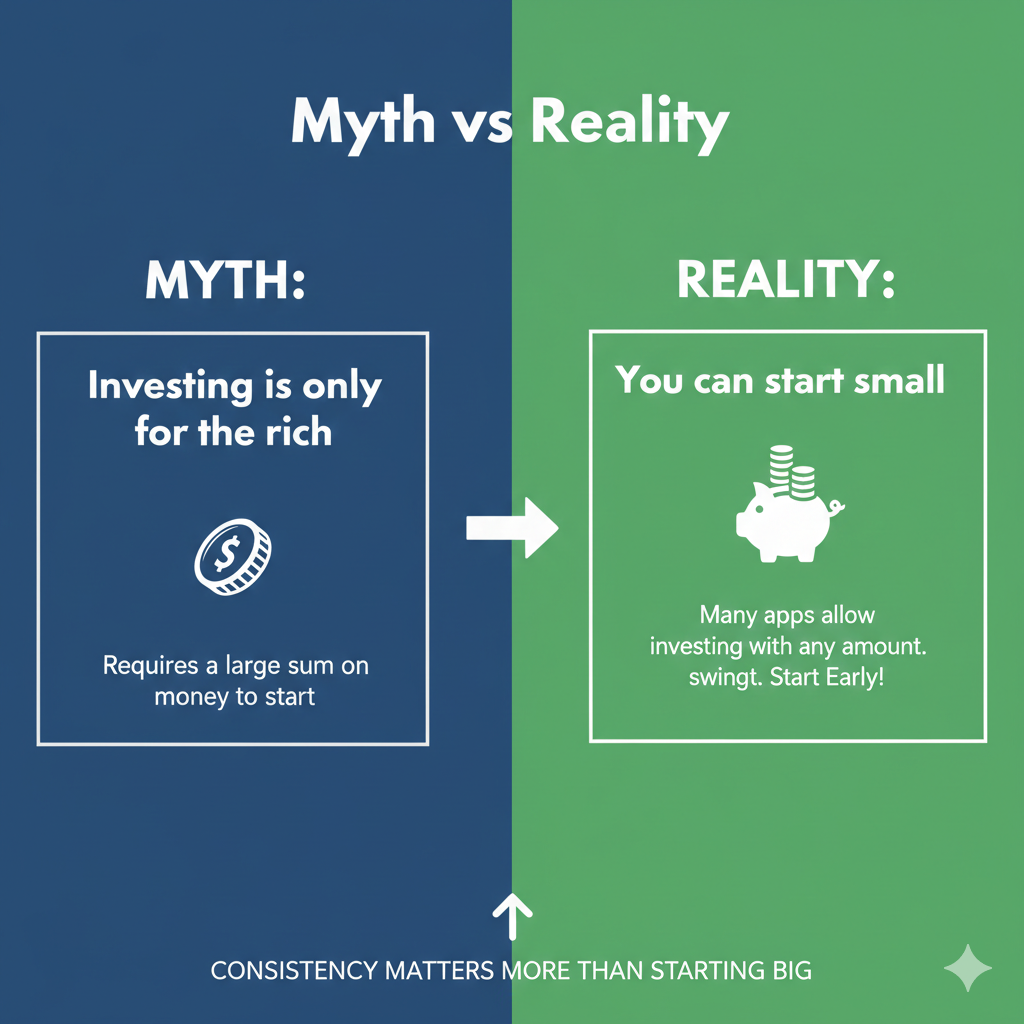
Myth vs reality
Myth: Short-term investing makes money faster
Reality: It often loses money faster for beginners
Myth: Long-term investing is passive and lazy
Reality: It requires discipline and patience
Myth: You must choose only one forever
Reality: Many investors use both—with clear boundaries
When long-term investing makes more sense
Choose long-term investing if:
- You have a full-time job
- You want predictable growth
- You dislike constant monitoring
- Your goals are years away
Long-term investing rewards consistency over intelligence.
When short-term investing might fit
Short-term investing may fit if:
- You enjoy analysis and fast decisions
- You can manage stress
- You’re prepared for losses
- You treat it as a skill to develop
It’s optional—not required for success.
[Money-Saving Recommendation] Most beginners benefit from building a long-term foundation first, then experimenting with small short-term positions later.
Table: Long-term vs short-term investing compared
| Factor | Long-Term Investing | Short-Term Investing |
| Time horizon | Years | Days to months |
| Risk over time | Lower | Higher |
| Stress | Low–Medium | High |
| Time required | Low | High |
| Beginner suitability | High | Low |
| Compounding benefit | High | Low |
Real-world scenario: balancing both approaches
In practical situations, many investors:
- Use long-term investments for core goals
- Allocate a small portion to short-term learning
- Keep strategies separate to avoid confusion
This protects long-term progress while allowing experimentation.
FAQs
Is long-term investing safer than short-term?
Over time, yes—risk decreases with longer horizons.
Can beginners do short-term investing?
They can, but it’s riskier and harder to sustain.
Which strategy makes more money?
Long-term investing outperforms for most people.
Can I switch strategies later?
Yes. Strategies can evolve with experience.
Do professionals use long-term investing?
Yes—many rely on it as their core approach.
Is short-term investing gambling?
It can be if done without skill or discipline.
Conclusion
Long-term vs short-term investing isn’t about which is better—it’s about which fits your goals, time, and temperament. For most beginners, long-term investing offers growth with less stress and fewer decisions. Build that foundation first, then explore other strategies if—and only if—it fits you
Internal link
How Much Money Do You Need to Start Investing?
External link