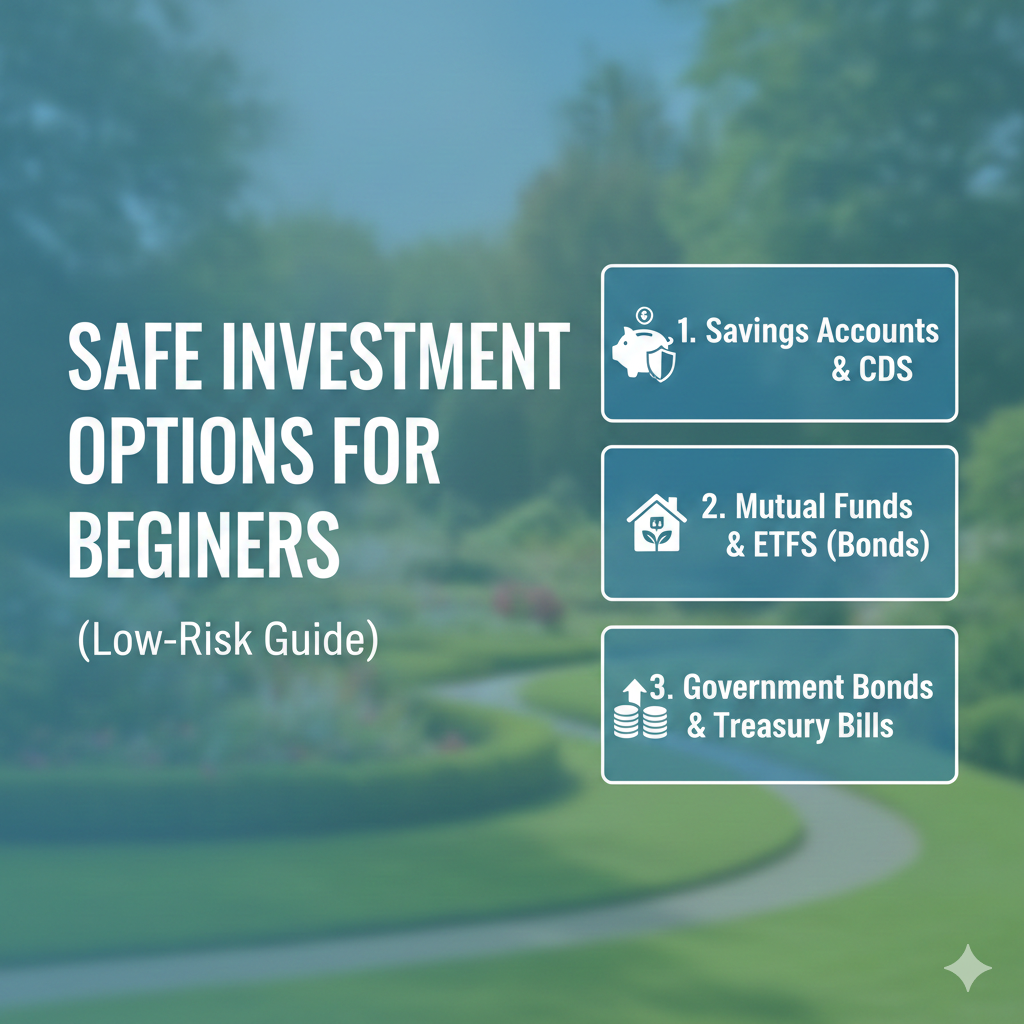
Introduction
Safe investments are the foundation for beginner investors—they prioritize capital protection, diversification, and consistency over chasing quick returns. Many new investors worry about losing money, especially when online content exaggerates gains and hides risks. This guide explains what “safe” really means in investing, which options suit beginners best, common mistakes to avoid, and how to build confidence without gambling your savings.
What “safe” really means in investing
In investing, safe does not mean risk-free. It means:
- Lower volatility
- High diversification
- Long-term stability
- Reduced chance of permanent loss
Safety comes from structure, not prediction.
[Expert Warning] What beginners often overlook is that avoiding all risk guarantees losing purchasing power to inflation.
The safest investment options for beginners (ranked by stability)
1) Broad Market Index Funds / ETFs
Often the safest investment for beginners.
Why they’re safe:
- Diversified across hundreds of companies
- Low cost
- Track overall market growth
They reduce dependence on any single business.

2) Government Bonds & Bond Funds
Lower risk than stocks, lower returns.
Best for:
- Stability
- Capital preservation
- Reducing portfolio volatility
Bond funds add diversification without requiring bond selection.
3) High-Interest Savings & Money Market Funds
Not growth investments—but safe parking options.
Use these for:
- Emergency funds
- Short-term goals
- Cash stability
They protect capital while earning modest returns.
4) Target-Date or Balanced Funds
All-in-one solutions for beginners.
Why they help:
- Automatic diversification
- Risk adjusted over time
- Minimal decision-making
Good for hands-off investors.
Common beginner mistakes that make “safe” investing risky
Mistake 1: Treating safety as zero volatility
Fix: Accept small fluctuations for long-term growth.
Mistake 2: Overloading on “safe” assets
Fix: Too much cash or bonds can stall progress.
Mistake 3: Chasing guaranteed returns
Fix: Be cautious of promises—real safety is boring.
[Pro-Tip] From real market behavior, diversified investments feel risky short term but become safer over time.
Information Gain: Safety depends more on time than asset
Top SERP articles focus on asset types. What they miss is time horizon.
- Short term → safety favors cash and bonds
- Long term → diversified equities become safer
Risk decreases as time increases—this is the core investing paradox beginners rarely hear.
Real-world scenario: investing safely with fear of loss
In practical situations, beginners invest safely by:
- Starting with diversified funds
- Investing small, regular amounts
- Avoiding daily price checks
Confidence grows as volatility becomes familiar—not threatening.

Beginner mistake most people make
The biggest mistake is waiting for the “perfect safe option.” In reality, delaying investing often costs more than small, controlled risk taken early.
How to build a beginner-safe investment mix
A simple structure:
- Growth base: diversified equity fund
- Stability layer: bond fund or cash
- Buffer: emergency savings
Adjust proportions based on comfort, not fear.
[Money-Saving Recommendation] Beginner-friendly investing platforms often offer diversified funds with low minimums—reducing risk and entry barriers.
Table: Beginner-safe investments compared
| Investment Type | Risk Level | Return Potential | Beginner Suitability |
| Index ETFs | Medium | Medium–High | Very High |
| Bond Funds | Low–Medium | Low–Medium | High |
| Savings Accounts | Very Low | Low | High (short term) |
| Balanced Funds | Medium | Medium | High |
| Individual Stocks | High | High | Low (early stage) |
FAQs
What is the safest investment for beginners?
Diversified funds combined with time are generally safest.
Are bonds safer than stocks?
Yes in the short term, but lower growth long term.
Is saving safer than investing?
Yes for short-term needs, not for long-term growth.
Can beginners lose money with safe investments?
Yes short term, but risk reduces over time.
Should beginners avoid stocks completely?
No—diversified exposure is important.
How long should beginners invest to be safe?
Ideally 5–10 years or more.
Conclusion
Safe investing for beginners isn’t about eliminating risk—it’s about controlling it. Diversification, time, and consistency matter more than finding the “perfect” asset. Start small, stay patient, and let structure—not fear—guide your decisions.
Internal link
Difference Between Stocks and ETFs for Beginners
External link
SEC.gov | Beginners’ Guide to Asset Allocation, Diversification, and Rebalancing